
Can a Neural Network Match Dermatologists? Skin Cancer Detection with AI
Key insight: A 2017 study trained a convolutional neural network on 129,450 clinical images across 2,032 skin disease classes. Against 21 board-certified dermatologists on biopsy-verified images, the AI hit an AUC of 0.96, matching or exceeding human performance.
Why This Study Matters
Skin cancer is one of the most common cancers worldwide, yet specialist access is limited. This study tested whether a deep learning model fed only images could rival dermatologists in spotting malignant lesions. Matching human performance suggests AI could expand early detection—especially in underserved regions.
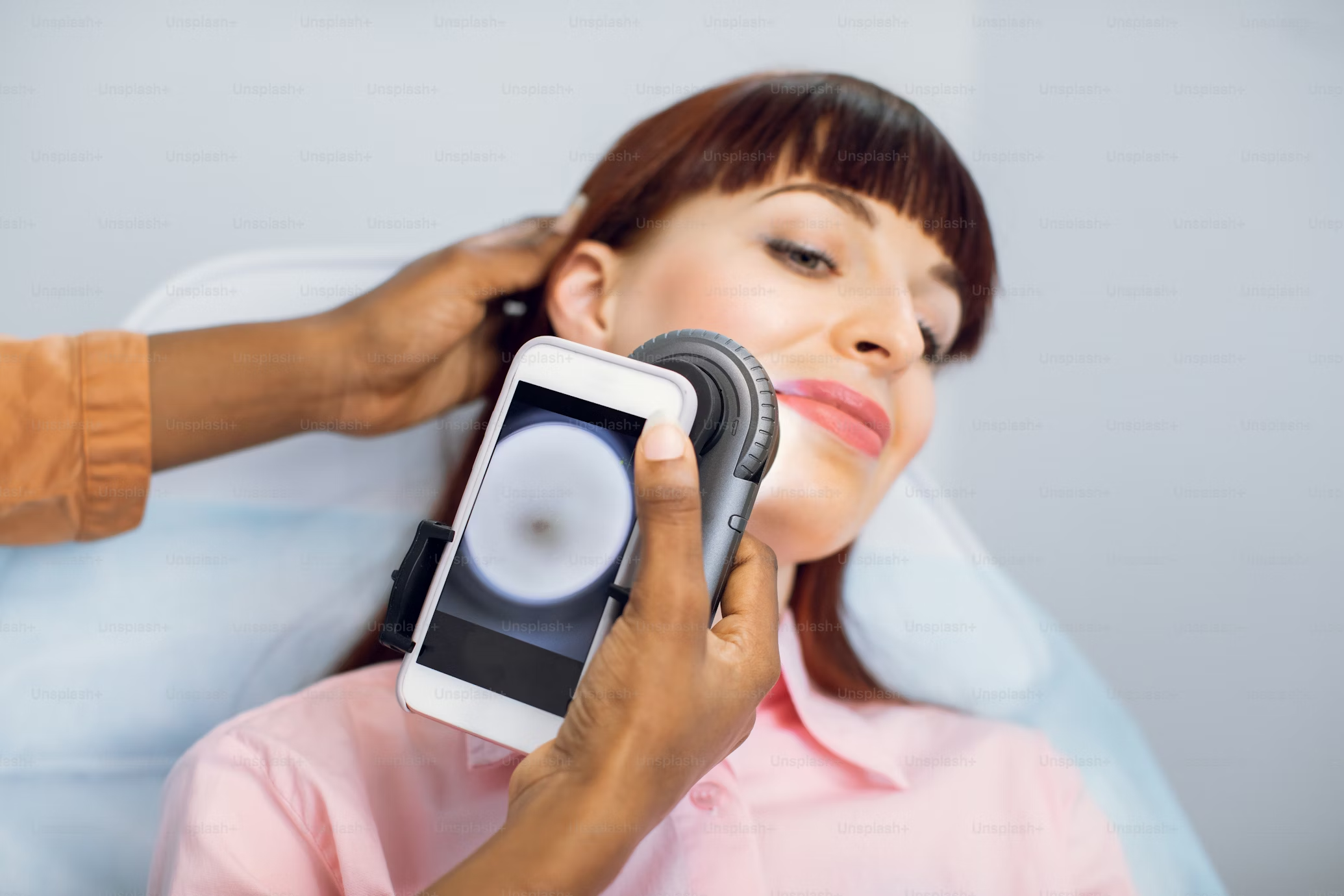
What is the AI Model?
The research team used an Inception v3 convolutional neural network, pre-trained on ImageNet and fine-tuned on a massive, diverse set of labeled clinical photographs. The model learned to distinguish benign from malignant lesions without hand-crafted features.
Study Outline
| Aspect | Details |
|---|---|
| Focus | AI model vs. dermatologists on melanoma & nonmelanoma images |
| Dataset | 129,450 clinical images; 2,032 disease categories |
| Experts | 21 board-certified dermatologists |
| Design | Retrospective image classification; biopsy-confirmed labels |
| Test Set | 1,200+ images with biopsy results |
| Metric | Area Under ROC Curve (AUC) |
Key Results
- AUC (AI): 0.96
- AUC (Average Dermatologist): ~0.91
- Performance held across both melanoma and nonmelanoma skin cancers
- AI made fewer false negatives, reducing missed cancers
Real‑World Implications
| Use Case | Benefit |
|---|---|
| Remote screening | Triage suspect lesions before specialist review |
| Teledermatology | Instant, on-demand second opinions via smartphone |
| Resource-limited clinics | Augment scarce specialist availability |
| Clinical decision support | Reduce diagnostic errors and improve workflow speed |
Limitations & Considerations
- Image quality dependent: Poor lighting or focus can degrade accuracy
- No patient history: Model only sees visuals, not risk factors
- Retrospective design: Needs prospective trials in clinical workflows
- Regulatory approval required: For real-world deployment
Summary
This study shows a well-trained CNN can match—and in some metrics exceed—dermatologists in classifying skin lesions. With large-scale image datasets, AI could become a powerful early-warning tool, expanding access to expert-level care.
Sources
- Esteva, A., Kuprel, B., Novoa, R. A. et al. Dermatologist-level classification of skin cancer with deep neural networks. Nature 542, 115–118 (2017). DOI: 10.1038/nature21056
Disclaimer
This article summarizes findings from real peer-reviewed research. It is intended for educational and informational purposes only.